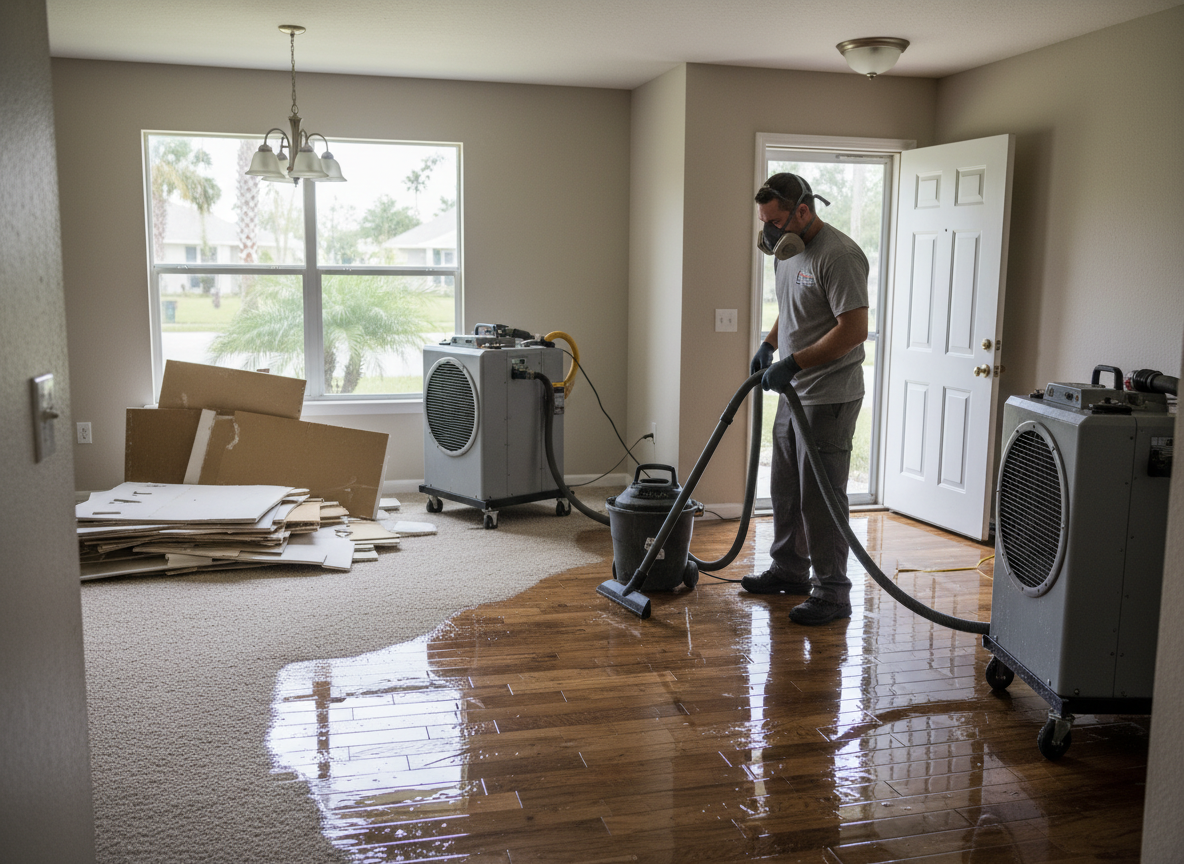
Tampa's humid subtropical climate brings heavy summer rains that frequently overwhelm older plumbing in homes built before 1980 in neighborhoods such as Ybor City and Seminole Heights. These properties often have original cast-iron pipes and limited crawlspace ventilation, so water that reaches subfloors or wall cavities can spread mold within 48 hours. Restoration crews must pull baseboards early and use moisture meters on brick or stucco exteriors common in South Tampa and Davis Islands to locate hidden saturation before it reaches neighboring units.
Flooding near the Tampa Riverwalk and Lowry Park Zoo area often involves sediment-laden water that carries silt into hardwood floors and HVAC systems. Technicians extract standing water first, then run industrial dehumidifiers calibrated for 80-plus percent outdoor humidity to prevent secondary damage in multi-story homes. In West Tampa and Brandon, slab-on-grade construction means crews frequently have to remove sections of tile or carpet to reach trapped moisture under the concrete, a step skipped at the homeowner's risk.
Hillsborough County building codes require permits for any structural drying that affects load-bearing walls, so restoration plans in Downtown Tampa or Hyde Park must document moisture readings before drywall removal. Nearby cities like St. Petersburg and Clearwater share the same wet-season patterns, but Tampa's inland drainage issues create longer drying cycles when water backs up from overwhelmed storm sewers.
Technician insight
In Tampa the thing that catches most people out with water damage restoration is how quickly mold appears once summer humidity hits 80 percent or higher; older homes in Ybor City and Seminole Heights with closed-up crawlspaces trap moisture so long that a small pipe leak turns into full wall replacement if drying does not start the same day.
Hyde Park Townhome Leak
Heavy rain overwhelmed a roof valley on a 1960s townhome near Swann Avenue. Water traveled along joists into the second-floor bedroom and HVAC closet. Crews extracted water, removed wet insulation, and ran drying equipment for five days until readings stabilized, allowing the homeowner to avoid full ceiling replacement.
Water Damage Restoration Services We Offer
✓Emergency Water Extraction
Rapid removal of standing water from homes in South Tampa and Davis Islands using truck-mounted pumps to limit further saturation of floors and walls.
✓Structural Drying and Dehumidification
Placement of commercial air movers and dehumidifiers in Ybor City and Seminole Heights properties to pull moisture from older plaster and hardwood before mold sets in.
✓Mold Remediation After Water Damage
Containment and removal of mold colonies triggered by summer rains in Hyde Park and West Tampa homes where poor ventilation allows growth behind cabinets and in attics.
✓Carpet and Flooring Restoration
Cleaning, drying, or replacement of water-damaged carpet and laminate in Brandon and Clearwater-area residences after leaks from appliances or roof penetrations.
✓Sewage and Contaminated Water Cleanup
Safe extraction and disinfection of Category 3 water in Downtown Tampa properties near aging municipal lines that back up during heavy storms.
✓Document and Content Drying
Freeze-drying and recovery of books, photos, and electronics soaked during flooding near the Tampa Riverwalk or Busch Gardens vicinity.
Water Damage Restoration Cost in Tampa, FL
| Service | Typical Range | What Affects It |
|---|---|---|
| Initial Assessment | Free | During Mon–Fri 8am–6pm or Sat 9am–2pm at Odessa base address |
| Water Extraction | $800–$2,500 | Varies by volume and whether sewage is involved |
| Drying Equipment Rental | $400–$1,200 | Per week depending on number of rooms and humidity levels |
| Mold Remediation Add-On | $1,200–$3,500 | Required when growth is found behind walls in older Tampa homes |
Ranges are typical for Tampa, FL and confirmed with an exact written quote before any work starts.
How it works
- 1
Initial Assessment
Technicians inspect affected rooms in the specific Tampa neighborhood, document moisture levels in walls and floors, and note any HVAC or electrical risks.
- 2
Water Removal
Standing water is extracted using pumps and wands suited to the home's construction type, whether slab or crawlspace common in Hillsborough County.
- 3
Drying And Monitoring
Air movers and dehumidifiers run until readings reach safe levels, with daily checks to adjust equipment for Tampa's high summer humidity.
- 4
Restoration Work
Damaged materials are replaced or repaired, followed by final cleaning to restore the space for occupancy.
Pricing
Upfront quotes provided after on-site inspection during listed business hours; final cost depends on water category, affected square footage, and materials.